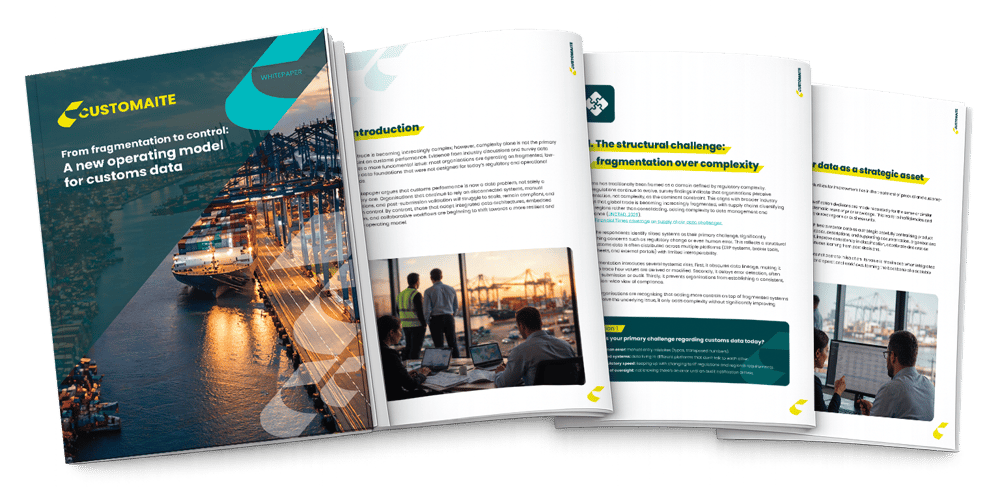
From fragmentation to control: A new operating model for customs data
This whitepaper argues that customs performance is now a data problem, not solely a regulatory one. Organisations that continue to rely on disconnected systems, manual interventions, and post-submission validation will struggle to scale, remain compliant, and maintain control. By contrast, those that adopt integrated data architectures, embedded validation, and collaborative workflows are beginning to shift towards a more resilient and scalable operating model.
Understanding today’s customs data challenges
Fragmentation is the real challenge, not complexity
While regulations continue to evolve, most organisations struggle primarily with disconnected systems and scattered data. This fragmentation limits visibility, increases errors, and makes it difficult to maintain control across customs processes.
Why current validation approaches fall short
Many organisations rely on spreadsheets or semi-automated tools, creating a false sense of control. Without consistent, embedded validation, errors are often detected too late—after submission or during audits.
A shift toward data-driven customs operations
Leading organisations are moving towards integrated data models, early-stage validation, and structured collaboration. This enables greater accuracy, scalability, and resilience in an increasingly complex trade environment.
Essential takeaways from the whitepaper
Fix the root cause, not the symptoms
Move validation earlier in the process
High-performing organisations validate data at the point of creation rather than after submission. This reduces rework, improves data quality, and strengthens compliance.